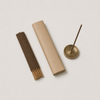
Stocking Incense: A Small-Footprint Category With Real Margin
, by Boston Wholesale Bay, 3 min reading time
, by Boston Wholesale Bay, 3 min reading time
Incense takes up almost no shelf space, never expires, and sells to a customer who buys on scent rather than price. Here is how to stock it so it actually turns.
Incense is an easy category to stock badly. Most shops carry three scents, put them flat on a shelf where the labels cannot be read, and conclude the category does not sell.
Stocked properly it is one of the better-behaved things you can put on a shelf: tiny footprint, no expiry, strong margin, and a customer who chooses on scent rather than price.
A 25g box of sticks is about the size of a pack of cards. You can display twenty scents in the space a single drinks facing occupies. Very few categories let you offer that much choice for that little shelf.
Incense has effectively no shelf life problem. A box that sits for six months is still perfectly sellable. That removes the main risk of stocking variety — you are not gambling on turn the way you are with anything perishable.
This is the important one. An incense customer is looking for a specific smell, or browsing for one they like. Price barely enters the decision, because there is no reference price in their head and the amounts are small.
What that means practically: range sells incense, not discounting. A customer who cannot find a scent they want buys nothing at all. A customer facing twenty options usually finds one.
We stock Song of India incense in 25g boxes of 25 sticks — twelve Zodiac scents plus a floral range. That is a sensible shape for a category like this: a themed set that gives customers a reason to come back and complete it, plus a spread of straightforward florals for people who just want something pleasant.
If you are starting from nothing, begin with breadth rather than depth. Eight to twelve scents, two or three boxes of each, is a better opening position than three scents with ten boxes. You are trying to find out what your particular customers want, and you cannot learn that from three options.
Incense lives or dies on presentation more than almost any other small category.
Broader than most shop owners expect. There is the obvious overlap with smoke shop customers, but incense also sells steadily to people buying for the house — covering cooking smells, pets, or simply because they like it. It moves as a small gift too, particularly the themed sets.
That mixed customer base is why it works in a general convenience setting and not just a specialist shop.
Incense sits naturally with other home and ambience goods — household items and personal care attract an overlapping shopper. It also works adjacent to lighters and accessories, since the customer needs a flame either way.
Browse the full incense range, or get in touch if you want a starting selection put together.